Automating Training and Onboarding: How AI Can Instantly Generate Step-by-Step Recaps
Discover how AI agents can solve the common problem of lost knowledge and inconsistent training materials by automatically generating comprehensive step-by-step guides from live sessions.
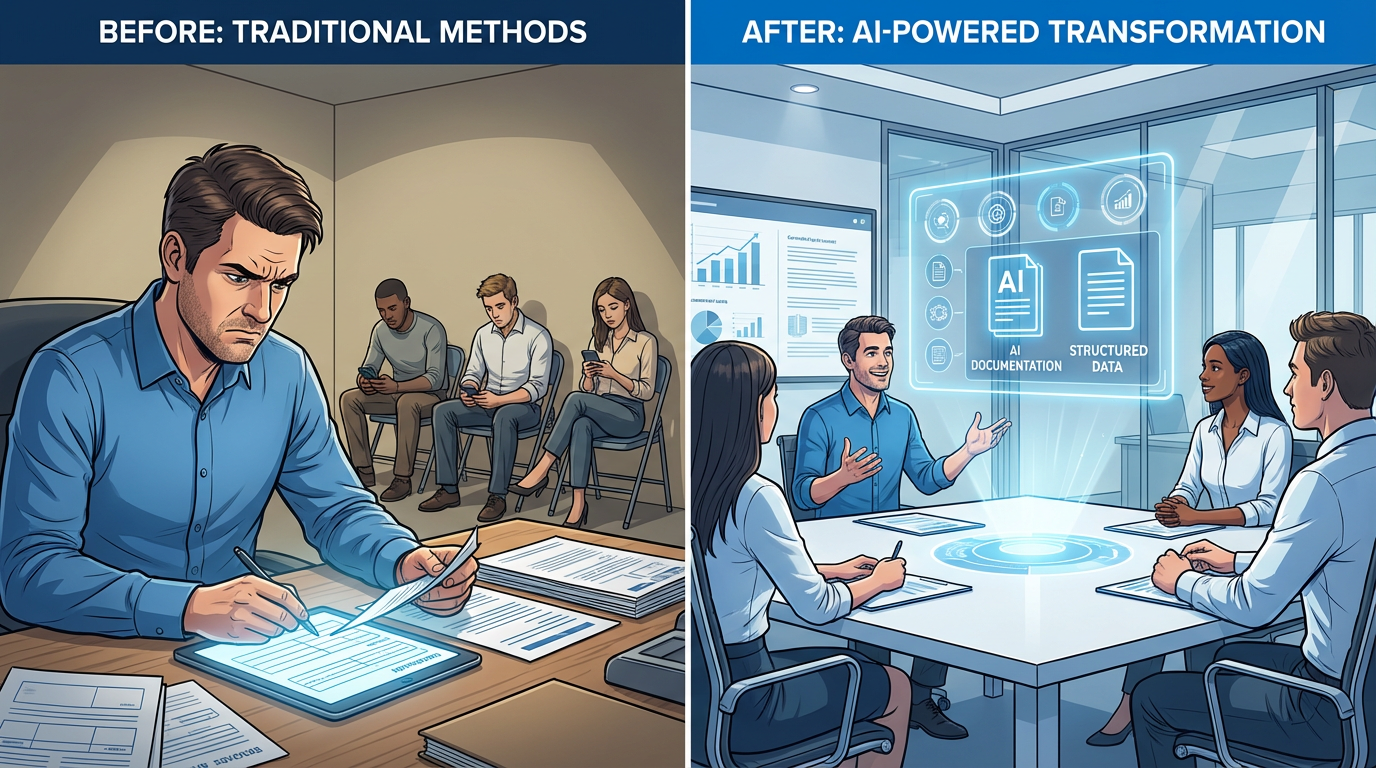
The Knowledge Gap That's Costing Your Team
Picture this scenario: You've just delivered an intensive training session to your team. The content was rich, the demonstrations were clear, and everyone seemed engaged. But within minutes of ending the session, your inbox fills with messages: "Can you send me those steps again?" "I missed the part about configuration—could you write it down?" "I need to follow this at my own pace, do you have documentation?"
Sound familiar? This frustration is universal across organizations, from tech startups to enterprise companies. The gap between live training delivery and actionable, accessible documentation is costing teams countless hours and creating inconsistent knowledge transfer.
According to recent studies, 70% of training content is forgotten within 24 hours if not properly documented and reinforced. Yet most organizations still rely on manual note-taking and post-session documentation that arrives days or weeks later—if at all.
The "Recap Generator" Revolution: AI That Never Forgets
What if every training session automatically produced a comprehensive, step-by-step guide the moment it ended? This isn't science fiction—it's the reality that AI agents are making possible today.
How the AI Recap Generator Works
The solution is elegantly simple yet powerful:
- Session Capture: An AI agent monitors your training session through chat logs, transcripts, or screen recordings
- Content Analysis: The agent identifies key procedures, decision points, and actionable steps
- Structured Output: Within minutes, it generates a clear, sequential guide with:
- Numbered step-by-step instructions
- Decision trees for different scenarios
- Troubleshooting tips for common issues
- Links to relevant resources and tools
Real-World Implementation Example
Consider a software development team learning a new deployment workflow. During the live session, the instructor demonstrates:
- Setting up the development environment
- Configuring API connections
- Running automated tests
- Deploying to staging and production
Instead of frantically taking notes, team members can focus entirely on understanding the concepts. The AI agent captures every detail and produces a comprehensive guide like this:
## Deployment Workflow Guide

### Prerequisites
- Development environment access
- API credentials configured
- Testing framework installed

### Step 1: Environment Setup
1. Clone the repository: `git clone [repository-url]`
2. Install dependencies: `npm install`
3. Configure environment variables in `.env` file
4. Verify setup: `npm run test`

### Step 2: API Configuration
1. Navigate to the API settings panel
2. Add your authentication token
3. Test connection with: `curl -H "Authorization: Bearer [token]" [api-endpoint]`
4. Verify response status is 200

[... and so on]
Why This Approach Is Critical for Modern Training
1. Self-Paced Learning Becomes Reality
The most common request from training participants is the ability to "follow at their own pace." When learners can access detailed, step-by-step documentation, they can:
- Pause and review complex concepts
- Retry failed attempts without interrupting the group
- Reference specific steps weeks or months later
- Share knowledge with team members who missed the session
2. Error Recovery Without Embarrassment
Nothing kills learning momentum like getting stuck on step 3 of a 20-step process. With AI-generated documentation, learners can:
- Quickly identify where they went wrong
- Jump back to the correct step without asking for help
- Maintain confidence and continue learning independently
3. Consistent Knowledge Transfer
Manual documentation is prone to:
- Missing critical steps
- Inconsistent terminology
- Personal interpretation bias
- Delayed delivery
AI agents eliminate these issues by capturing exactly what was demonstrated, using consistent language, and delivering immediately.
Implementation: From Concept to Reality
The Simple Approach: Chat Log Processing
The most accessible implementation uses existing communication tools:
Step 1: Session Documentation
- Conduct training sessions in platforms that log interactions (Slack, Teams, Discord)
- Encourage participants to ask questions in chat
- Use screen sharing with commentary
Step 2: AI Processing
- Feed chat logs and transcripts to an AI agent
- Use prompts like: "Extract all actionable steps from this training session and create a numbered guide"
- Include context about the audience and technical level
Step 3: Structured Output
- Generate markdown documentation with clear headings
- Include troubleshooting sections for common issues
- Add links to relevant tools and resources
Advanced Implementation: Real-Time Processing
For organizations ready to invest in more sophisticated solutions:
Workflow Automation Platform Integration
- Set up automated workflows that trigger during training sessions
- Use speech-to-text capabilities to capture verbal instructions
- Implement real-time processing for immediate documentation delivery
Multi-Modal Content Capture
- Combine screen recordings, audio transcripts, and chat logs
- Use computer vision to identify UI elements and actions
- Generate documentation with screenshots and annotations
Measuring Success: The Impact on Team Development
Organizations implementing AI-powered training documentation report:
Quantitative Benefits
- 75% reduction in post-training support requests
- 60% faster onboarding for new team members
- 90% improvement in knowledge retention after 30 days
- 50% decrease in training session repetition needs
Qualitative Improvements
- Higher confidence levels among trainees
- More engaging training sessions (less note-taking, more participation)
- Consistent knowledge base across all team members
- Reduced trainer burnout from repetitive questions
Getting Started: Your First AI Training Assistant
Week 1: Assessment and Planning
- Identify High-Value Training Sessions: Focus on processes that are frequently repeated or cause confusion
- Choose Your Tools: Start with existing platforms (chat logs, meeting transcripts)
- Define Success Metrics: How will you measure the impact?
Week 2: Pilot Implementation
- Select a Simple Use Case: Choose a straightforward process with clear steps
- Run a Test Session: Conduct training while capturing all interactions
- Generate Your First Recap: Use AI to process the session data
Week 3: Refinement and Scaling
- Gather Feedback: Ask participants about the usefulness of the generated documentation
- Refine Your Prompts: Improve the AI instructions based on output quality
- Plan Broader Rollout: Identify additional training areas for automation
The Strategic Advantage: Why This Matters Now
In today's fast-paced business environment, the ability to rapidly transfer knowledge and skills is a competitive advantage. Organizations that can:
- Onboard new team members faster
- Reduce knowledge silos
- Maintain consistent processes across teams
- Enable self-directed learning
...are the ones that will thrive in an increasingly complex marketplace.
AI-powered training documentation isn't just about convenience—it's about building a learning organization that can adapt and scale efficiently.
Call to Action: Transform Your Training Today
The technology exists. The benefits are proven. The question isn't whether AI can improve your training processes—it's whether you'll implement it before your competitors do.
Start small, think big:
- Choose one recurring training session this week
- Capture the session data (chat logs, transcripts, recordings)
- Use AI to generate step-by-step documentation
- Share it with participants and gather feedback
- Measure the impact on follow-up questions and knowledge retention
Your team is already asking for better training documentation. AI agents can deliver it automatically, consistently, and immediately. The only question is: when will you start?
Ready to revolutionize your team's training process? Our AI Agents Workshop shows you exactly how to implement these solutions in your organization. Learn to build, deploy, and optimize AI agents that transform knowledge transfer from a bottleneck into a competitive advantage.
Related Articles
Accelerating Feature Development with AI Agents: The Breakdown Approach That Transforms Software Delivery
Discover how AI agents can revolutionize software development by breaking down complex features into manageable, testable components, creating a more efficient and reliable development flow that delivers results faster.
AI for Instant Market Intelligence: The Competitive Analysis Revolution
Discover how AI agents can deliver comprehensive competitive analysis in minutes instead of weeks, transforming market intelligence from a quarterly event into a real-time strategic capability.
The Two Pillars of AI Agent Evaluation: Mastering Retrieval and Generation for Reliable RAG Systems
Discover the essential framework for evaluating RAG (Retrieval-Augmented Generation) agents through two critical pillars: retrieval accuracy and generation quality. Learn how to build reliable AI systems that deliver consistent, trustworthy results.